

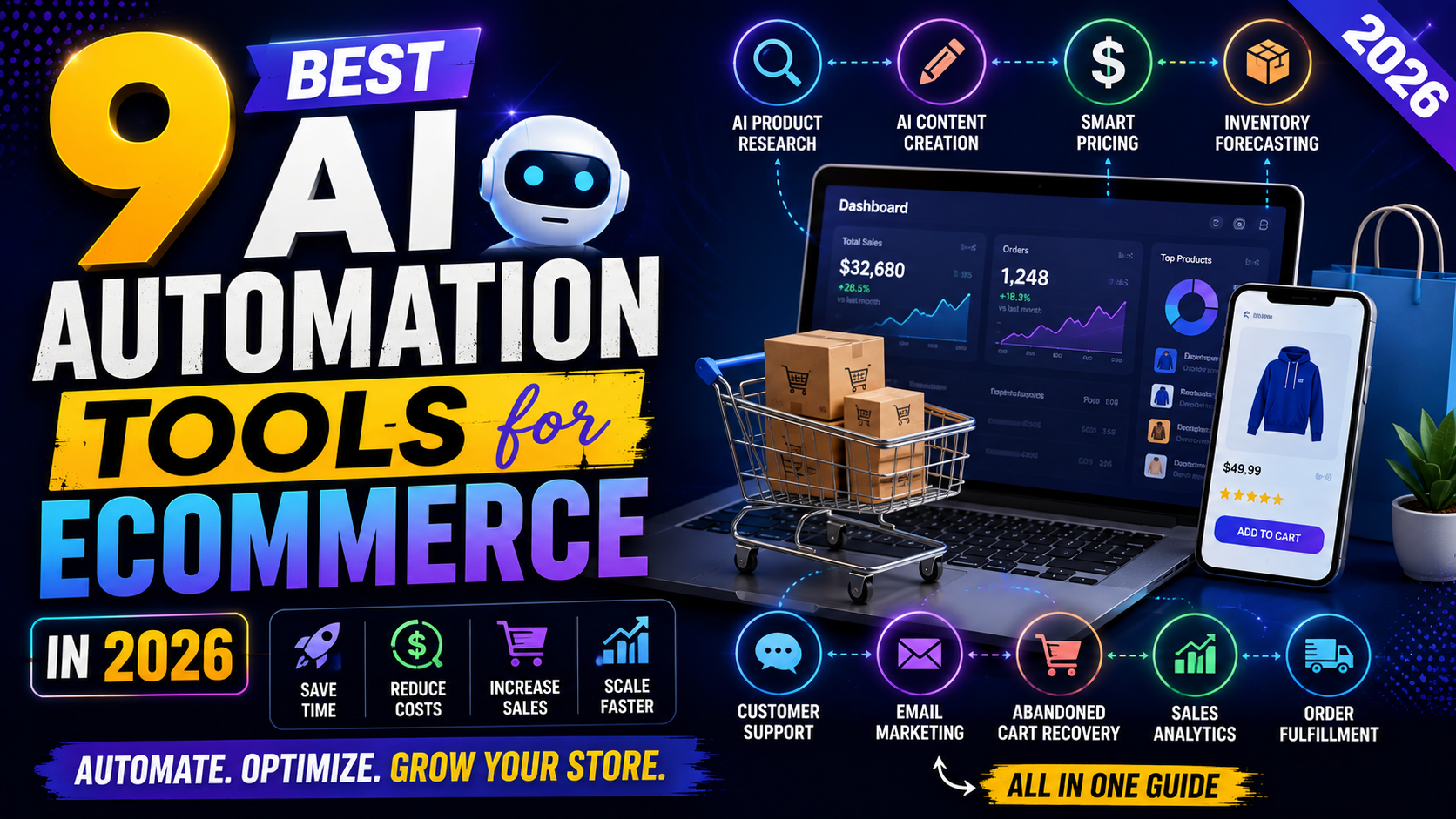

9 Best AI Automation Tools for Ecommerce in 2026:
Running an online store means juggling inventory, customer emails, ad campaigns, abandoned cart follow-ups, and product descriptions — often all before lunch. If you’re doing most of this manually, you’re losing hours you could spend actually growing your business.
That’s where AI automation tools for ecommerce come in. These tools handle repetitive tasks behind the scenes so you can focus on strategy instead of busywork. In this guide, you’ll learn what these tools actually do, which ones are worth your money, and how to pick the right one for your store size and budget.

What Are AI Automation Tools for Ecommerce?
In simple terms, these are software platforms that use AI to handle tasks that would normally require a human — things like answering customer questions, writing product descriptions, predicting inventory needs, or sending personalized marketing emails.
The difference between regular automation and AI automation is intelligence. A basic automation tool might send the same abandoned-cart email to everyone. An AI-powered one adjusts the message, timing, and even discount offer based on that specific customer’s behavior.
Why Ecommerce Businesses Need Automation Now
Customer expectations have changed. People expect instant replies, personalized recommendations, and fast checkout experiences — and they expect it 24/7, not just during business hours.
Manually keeping up with that is nearly impossible once your store scales past a handful of orders a day. Automation tools fill that gap by:
- Responding to customer queries instantly via chatbots
- Predicting demand so you don’t overstock or run out
- Personalizing product recommendations in real time
- Automating repetitive marketing tasks like email sequences
This isn’t just about saving time — stores using AI-driven personalization typically see better conversion rates because customers feel like the experience was built for them specifically.
Best AI Automation Tools for Ecommerce
1. Klaviyo
Best known for AI-powered email and SMS marketing. It segments customers automatically and personalizes campaigns based on browsing and purchase behavior.
2. Shopify Magic
Built directly into Shopify, this tool helps generate product descriptions, respond to customer inquiries, and even create marketing copy using AI.
3. Octane AI
Focused on quizzes and personalized shopping experiences. It helps customers find the right product faster, which reduces bounce rates.
4. Gorgias
An AI-powered customer support tool that handles common questions, order tracking, and returns automatically — freeing up your support team for complex issues.
5. Jasper
While not ecommerce-specific, Jasper is widely used for generating product descriptions, ad copy, and email content at scale.
6. Inventory Planner by SoStocked
Uses AI to forecast demand so you avoid overstocking or stockouts, especially helpful around seasonal sales.
7. Zapier with AI Steps
Connects your store to hundreds of apps and now includes AI-powered steps to summarize, generate, or sort data automatically.
8. Tidio
A chatbot and live chat tool with AI responses that handle FAQs, order updates, and basic troubleshooting without human input.
9. Yotpo
Uses AI to manage reviews, loyalty programs, and SMS marketing, helping turn one-time buyers into repeat customers.
How to Choose the Right AI Automation Tool for Your Store
Not every store needs every tool. Here’s a simple way to decide:
- If customer support is overwhelming you: Start with Gorgias or Tidio.
- If you’re losing sales to abandoned carts: Klaviyo’s automated flows are a strong starting point.
- If inventory issues are your biggest headache: Inventory Planner solves that directly.
- If you’re a one-person store: Shopify Magic gives you the most value built into a platform you likely already use.
A good approach is to start with one pain point, automate that fully, then move to the next bottleneck instead of trying to automate everything at once.
Common Mistakes to Avoid With Ecommerce Automation
- Automating without reviewing output — AI-generated product descriptions or replies should still get a quick human check, especially early on.
- Over-automating customer support — some situations genuinely need a human; make sure there’s an easy handoff option.
- Ignoring data quality — AI tools are only as good as the data they’re working with; messy inventory or customer data leads to bad predictions.
- Choosing tools based on hype alone — test the free trial on your actual store data before committing to an annual plan.
Frequently Asked Questions
Q: What is the best AI automation tool for small ecommerce businesses?
Shopify Magic is a strong starting point since it’s built into Shopify and requires no extra setup or technical skill.
Q: Can AI automation tools replace customer service teams?
Not entirely. They handle repetitive questions well, but complex or sensitive issues still need a human touch.
Q: How much do AI automation tools for ecommerce cost?
Pricing varies widely — some tools like Tidio offer free plans, while others like Klaviyo scale pricing based on your subscriber list size.
Q: Is AI automation worth it for a small store?
Yes, especially for time-consuming tasks like customer support and email marketing, where even small stores see hours saved per week.
Q: Do these tools integrate with Shopify and WooCommerce?
Most major tools, including Klaviyo, Gorgias, and Tidio, offer direct integrations with both platforms.
Final Thoughts
AI automation tools for ecommerce aren’t just a nice-to-have anymore — they’re becoming essential for staying competitive, especially as customer expectations keep rising. Whether your biggest challenge is customer support, inventory, or marketing, there’s a tool on this list built to solve it.
Start small: pick one pain point, test a tool against it, and measure the time you save. Once you see the results, scaling up to a fuller automation stack becomes a much easier decision.
If this helped clarify your options, share it with another store owner who’s still doing everything manually — they’ll thank you later.


Leave a Reply