

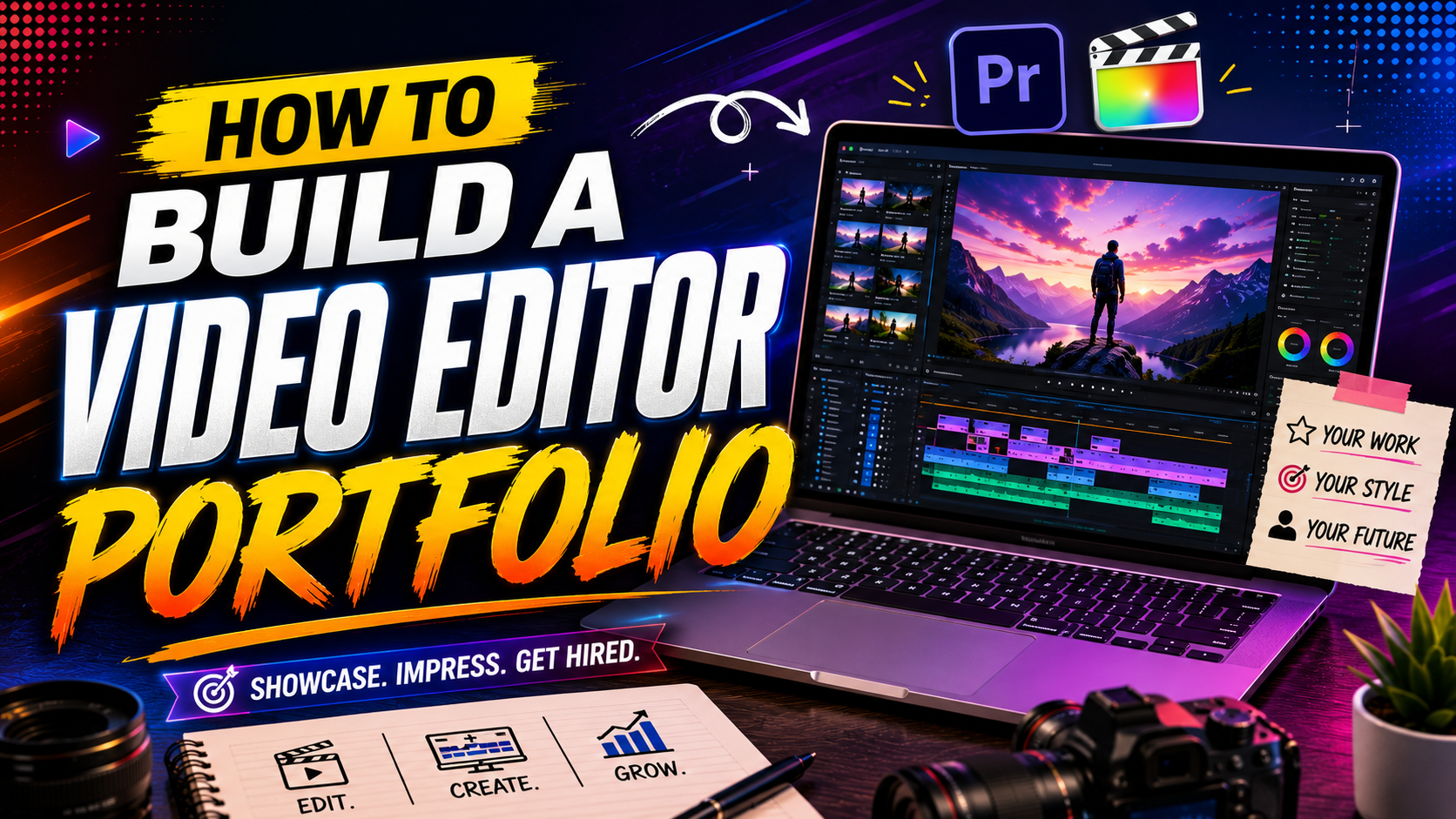

How to Build a Video Editor Portfolio That Actually Gets You Hired:
Here’s a hard truth: nobody hires a video editor based on a resume. Clients and studios want to see your work before they trust you with theirs. That’s why your video editor portfolio matters more than any certificate, course, or software skill you can list. It’s the single biggest factor between “maybe” and “hired.”
If you’re staring at a blank folder wondering what to put together, or you have a portfolio that isn’t landing calls, this guide walks through exactly what belongs in a strong video editor portfolio, how to structure it, and the mistakes that quietly push clients away.
Why Your Video Editor Portfolio Matters More Than Your Resume:
Editing is a visual craft. Someone can tell you they’re skilled with pacing, transitions, and color grading, but none of that means anything until they see it. A portfolio proves what you can actually do in a way that words never will.
Think about it from a client’s side. They’re not just hiring skill — they’re hiring trust. A tight, well-organized portfolio signals that you understand structure, pacing, and presentation, which are exactly the qualities they need in their own footage.
What to Include in a Video Editing Portfolio:
Quality Over Quantity
Three to five strong samples will always beat fifteen mediocre ones. Every clip in your portfolio is a representation of your judgment — including your judgment about what’s good enough to show. A cluttered portfolio makes clients dig for proof of skill instead of handing it to them.
Show Range Without Losing Focus
Include a mix that demonstrates versatility, such as:
A fast-paced social media edit (15–60 seconds)
A narrative or storytelling piece with a clear arc
A sample that highlights color grading or motion graphics
A before-and-after clip showing raw footage next to your final cut
That last one is often underused, and it’s one of the most persuasive things you can include. Clients rarely understand how much value an editor adds until they see the raw material side by side with the polished result.
Keep Samples Short:
Attention spans are short, and so is a client’s patience while reviewing editors. Aim for clips between 60 and 90 seconds. If a longer piece is essential, link to the full version separately rather than forcing every viewer to sit through it.
How to Build a Portfolio With No Client Work Yet:
This is the question almost every beginner editor asks, and it has a real answer.Create Your Own ProjectsRe-edit a public speech, a short film scene, or a podcast clip in your own style. This shows editorial judgment even without a paying client behind it.
Offer Free or Discounted Work Strategically:
Reach out to a local business, a small YouTuber, or a friend’s event footage and offer to edit it in exchange for a testimonial and full usage rights. Be selective — one polished, well-placed free project beats five rushed ones that don’t represent your best work.
Repurpose Personal Footage:
If you shoot your own content, even casual footage from a trip or an event, edit it as if it were a client project. Add pacing, music, color correction, and structure. It won’t look like a passion project once you treat it like professional work.
Structuring Your Video Editing Portfolio Website
Lead With Your Best Work
Put your strongest sample first. Most viewers decide within seconds whether to keep watching, so don’t save your best clip for the end.
Organize by Style or Niche:
If you edit across multiple styles — say, corporate video and social content — group samples clearly so a potential client can quickly find work relevant to their needs. A wedding videographer doesn’t need to scroll through your gaming montage to find your ceremony highlight reel.
Add Context, Not Just Clips
A single sentence under each sample explaining your role, the goal of the project, or a specific challenge you solved adds credibility. It shows you understand the “why” behind your editing choices, not just the “how.”
[Internal linking opportunity: link to a related post on “video editing career” or “video editing PC build guide” if available on your site.]
Common Portfolio Mistakes to Avoid:
Including outdated or weak early work just to pad the numbers
Using copyrighted music or footage without proper licensing, which can get samples taken down or scare off cautious clients
Forgetting mobile optimization, since many clients will view your portfolio on a phone first
No clear call-to-action, leaving visitors unsure how to actually contact or hire you
Overexplaining every clip instead of letting the work speak for itself
Frequently Asked Questions:
How many videos should be in a video editor portfolio? Three to five strong, varied samples are ideal. Quality and relevance matter far more than the total number of clips.
Where should I host my video editing portfolio? A simple personal website works best for professionalism, though Vimeo showreels or a well-organized YouTube playlist are solid alternatives, especially when starting out.
Can I build a portfolio without any paid client work? Yes. Self-directed projects, re-edits of public footage, and strategic free work for real people or small businesses can all build a credible, professional-looking portfolio.
Should I include a demo reel or individual project samples? Both work well together. A short demo reel grabs attention quickly, while individual project samples let interested clients dig deeper into your range.
How often should I update my video editor portfolio? Review it every few months and swap out weaker samples as your skills improve. Your portfolio should always reflect your current best work, not where you started.
Ready to Build a Portfolio That Gets Results?
Your video editor portfolio doesn’t need to be massive — it needs to be sharp, honest, and focused on your strongest work. Pick your best three to five samples, organize them with intention, and make it effortless for a client to say yes.
If you’re starting from scratch, choose one project this week and treat it like a real client job from start to finish. That single sample, done well, is often the piece that gets the ball rolling.
Leave a Reply