
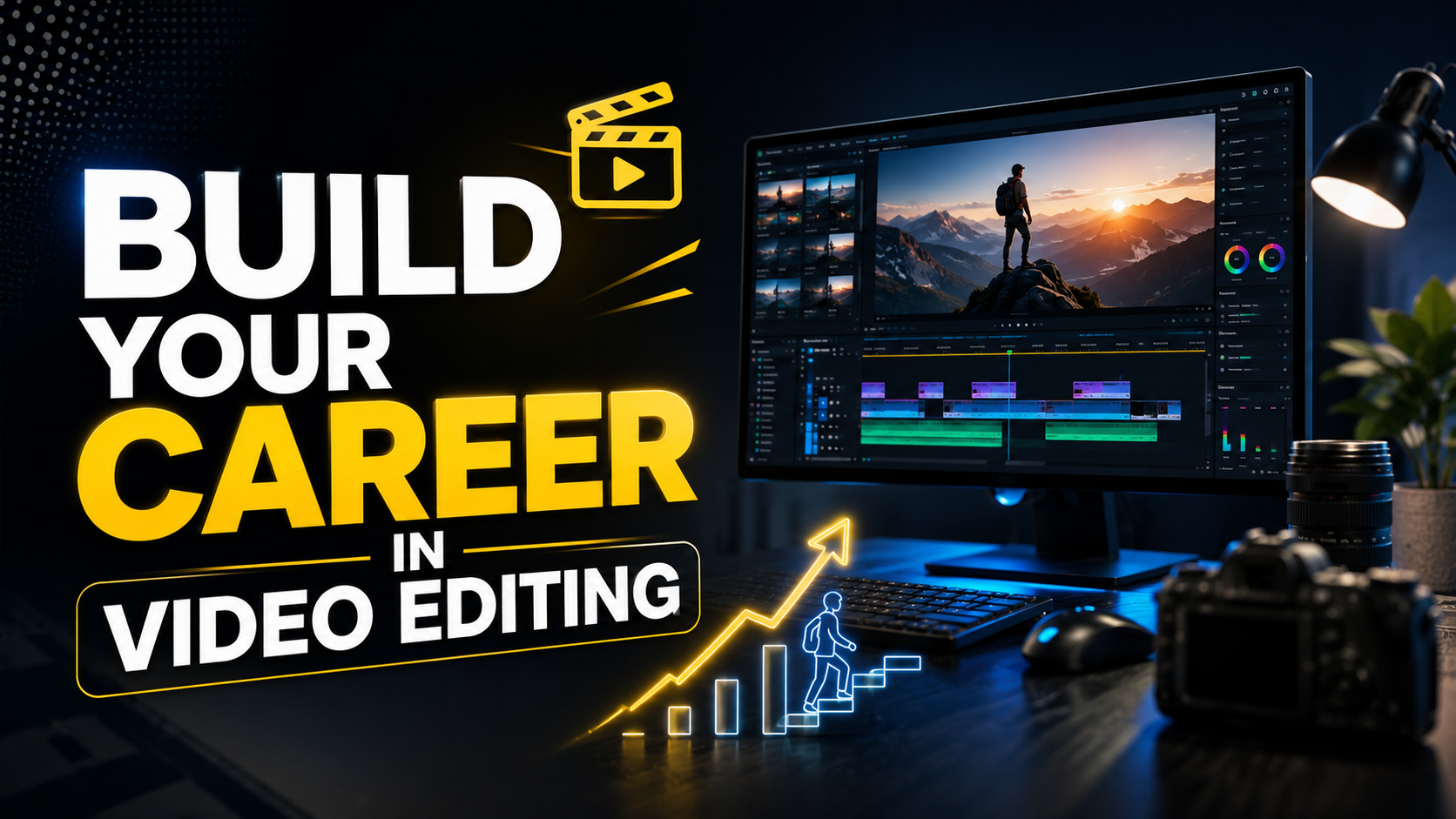

How to Build a Video Editing Career in 2026: A Complete Beginner’s Roadmap:
So you’ve been cutting clips for fun, maybe editing videos for friends, and now you’re wondering: can this actually turn into a real job? Short answer — yes. The video editing career path has never been more open. Between YouTube channels, streaming platforms, corporate marketing teams, and social media brands, the demand for skilled editors keeps climbing, and you don’t need a film school degree to break in.
This guide walks through exactly what it takes to start a video editing career — the skills, the software, the portfolio, and the money — so you can go from “curious beginner” to “hired editor” with a clear plan instead of guesswork.
What Does a Video Editor Actually Do?
Before chasing the job title, it helps to know what’s behind it. A video editor takes raw footage and shapes it into a finished, watchable story. That includes:
- Trimming and arranging clips for pacing and flow
- Adding transitions, text, graphics, and sound effects
- Color correcting and color grading footage
- Syncing music and audio levels
- Collaborating with directors, YouTubers, or marketing teams on the final vision
Editors work across industries — YouTube and social media, film and television, wedding videography, corporate training, advertising, and gaming. Each niche has its own style and pace, which means there’s room to specialize once you find what you enjoy.
Skills You Need to Start a Video Editing Career:
Technical Skills
You’ll need to be comfortable in at least one professional editing program. The three most common are Adobe Premiere Pro, DaVinci Resolve, and Final Cut Pro. DaVinci Resolve is a great starting point since it has a powerful free version, making it ideal if you’re learning on a budget.
Beyond software, focus on:
- Storytelling and pacing — knowing when a cut should be fast or slow
- Color grading basics — making footage look consistent and polished
- Audio mixing — clean sound is often more noticeable than clean visuals
- File organization and workflow — messy projects slow everyone down
Soft Skills That Actually Matter
Clients and employers consistently mention communication and reliability as deciding factors. Being able to take feedback without getting defensive, hitting deadlines, and asking clarifying questions before you start editing will set you apart more than fancy transitions ever will.
How to Learn Video Editing Without a Film Degree:
You genuinely don’t need a four-year degree to build a video editing career. Here’s a realistic learning path:
- Pick one software and stick with it for 3 months. Jumping between programs early just slows your progress.
- Follow structured tutorials, not just random YouTube clips — look for full courses that build projects from start to finish.
- Re-edit existing content. Take a public speech, short film clip, or podcast and re-cut it your own way. This builds real skill fast.
- Get feedback from other editors, whether in online communities, Discord groups, or local meetups.
Free online courses can get you 80% of the way there. The remaining 20% comes from actually editing real projects — which brings us to the next step.
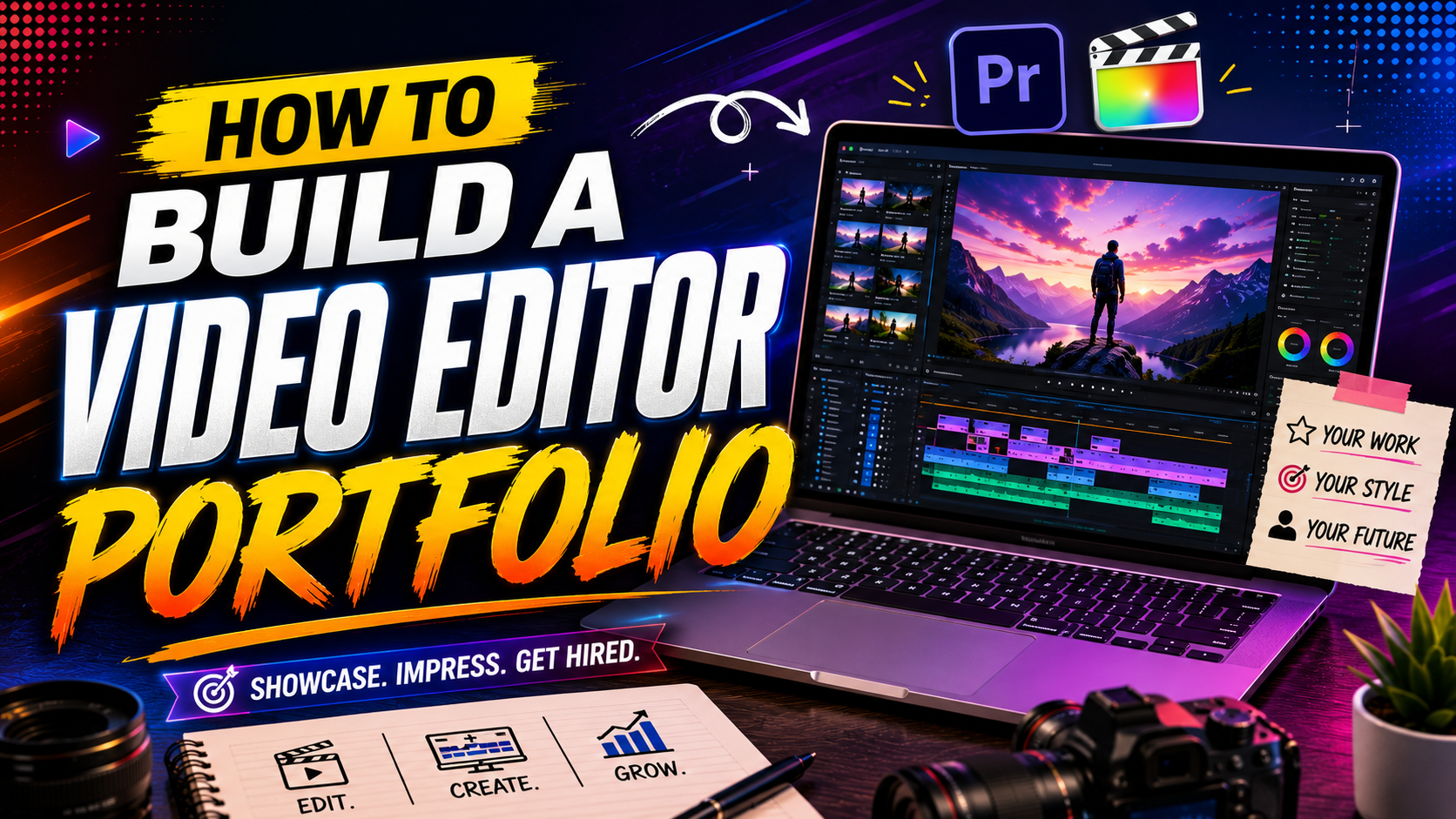
Building a Portfolio That Gets You Hired:
No client or studio hires an editor without seeing proof of skill. Your portfolio matters more than your resume in this field.
What to Include
- 3–5 short, polished samples (60–90 seconds each is plenty)
- A mix of styles: fast-cut social content, a narrative piece, and something with heavier color grading
- Before-and-after clips showing raw footage versus your edit — clients love seeing the transformation
If you don’t have real client work yet, create your own. Edit a friend’s wedding footage, cut a mock movie trailer, or offer a free edit to a small local business or content creator in exchange for a testimonial and usage rights.
Finding Video Editor Jobs and Freelance Clients:
Once you have a portfolio, it’s time to find work. There are two main routes:
Freelance Route
Platforms like Upwork, Fiverr, and Contra let you pitch directly to clients. Cold outreach to YouTubers, podcasters, and small businesses also works well — many creators are actively looking for reliable editors and don’t advertise it publicly.
In-House Route
Marketing agencies, production studios, and media companies regularly hire in-house or contract editors. Job boards like LinkedIn, ProductionHUB, and Mandy.com are worth checking weekly.
[Internal linking opportunity: link to a related post on “freelance vs in-house creative careers” or “how to price freelance video editing services” if available on your site.]
Video Editing Salary: What Can You Actually Earn?
Pay varies widely based on experience, niche, and location. Entry-level in-house editors typically start in a modest range, while experienced editors working in advertising, film, or specialized corporate video can earn significantly more. Freelancers often charge per project or per finished minute, and rates climb quickly once you have a strong portfolio and repeat clients. Specializing in a high-demand niche — like YouTube long-form content, motion graphics, or corporate video — tends to command higher rates than general editing work.
Common Mistakes Beginners Make:
- Learning too many tools at once instead of mastering one
- Skipping storytelling fundamentals and focusing only on flashy effects
- Underpricing freelance work just to land the first client
- Not backing up projects, which can cost you hours of unrecoverable work
Avoiding these early on will save you a lot of frustration down the line.
Frequently Asked Questions:
Do I need a degree to have a video editing career? No. Most working editors are self-taught or trained through online courses. What matters most is a strong portfolio and consistent, reliable work.
How long does it take to become a video editor? With focused practice, most beginners can build a basic portfolio and land their first paid gig within 3–6 months.
What software should beginners learn first? DaVinci Resolve is a strong starting point because of its free version and professional-grade tools. Adobe Premiere Pro is also widely used in the industry and worth learning once you’re comfortable with the basics.
Is video editing a good career in 2026? Yes. Demand from YouTube, streaming platforms, and businesses producing video marketing content continues to grow, creating steady opportunities for both freelance and in-house editors.
Can I start a video editing career part-time? Absolutely. Many editors start by taking on small freelance projects alongside a full-time job before transitioning to editing full-time once their client base grows.
Ready to Start Your Video Editing Career?:
A video editing career rewards people who are consistent more than people who are naturally talented. Pick your software, edit something today, and start building your portfolio — the opportunities are already out there waiting for editors who show up and do the work.
If you’re ready to take the next step, start by editing one short project this week and sharing it in an online editing community for feedback. That single habit, repeated, is how every working editor got started.
Leave a Reply